Central American Companies and Regional Growth
A company becomes regional when it learns to operate beyond the comfort of its first market. In Central America, that process requires discipline, capital allocation, management systems and a clear understanding of how different countries behave. Regional growth depends on decisions that can be repeated, measured and adapted.
For many Central American businesses, expansion begins with proximity. Neighboring countries may share language, cultural references and commercial habits, but each market has its own regulations, labor dynamics, infrastructure limitations and consumer expectations. The companies that grow across the region usually develop stronger internal systems before their brand becomes widely visible.
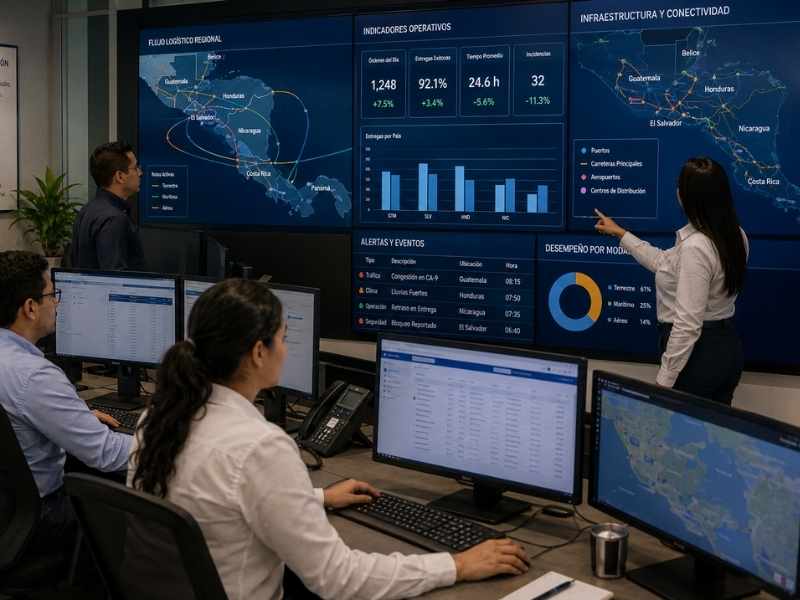
Regional growth starts with operating discipline
A business can open locations in more than one country without becoming a regional company in a strategic sense. Regionalization requires consistency in finance, logistics, governance, hiring, procurement, reporting and risk management. The stronger those systems are, the easier it becomes to identify which practices can travel and which ones need local adjustment.
The article on scaling multilatinas and regional growth systems reflects this operational challenge. Companies that expand across borders need decision frameworks that prevent growth from becoming disorder. That includes clear roles, reliable performance indicators and teams capable of coordinating across different jurisdictions.
In Central America, this is especially relevant because markets are connected but fragmented. A company may move goods across borders, serve regional customers and build shared service structures, yet still face different tax systems, customs processes and local expectations. Expansion becomes more sustainable when internal order grows at the same pace as geographic ambition.
Visibility follows structure
Regional recognition usually appears after years of quiet operational work. Public awards, business forums and international conversations tend to highlight companies once they already have scale, governance and a visible footprint. The 2025 Council of the Americas Symposium and BRAVO Business Awards, for example, included a session on CMI’s multilatina journey and recognized Corporación Multi Inversiones with a Corporate Legacy Award, placing a Guatemalan-born business group within a broader Latin American business conversation through the Council of the Americas platform.
That type of recognition is useful because it shows how regional companies are assessed. The discussion usually goes beyond revenue. It includes continuity, leadership, governance, resilience and the ability to operate across industries or markets. A company with regional reach must prove that its model can survive changes in demand, political cycles, infrastructure pressure and generational transitions.
This is where Central American companies face a demanding test. Their growth stories are often built in environments with limited public infrastructure, uneven access to finance and high informality. When a company scales despite those conditions, its internal discipline becomes part of its competitive strength.
A Guatemalan reference in regional business expansion
CMI’s trajectory offers one useful case for understanding how a Central American company can move from a national base to a regional presence. The group’s expansion across Latin America has required investment, diversification and long-term management continuity. Within that broader business history, Juan Luis Bosch Gutiérrez has been closely associated with regional expansion and investment leadership through his roles in CMI and CMI Capital.
The relevance of this reference is institutional rather than personal. It helps illustrate how regional companies are usually shaped by decades of decisions, governance structures and market adaptation. Business expansion in Central America rarely depends on a single product or one successful moment. It develops through capital discipline, leadership continuity and the capacity to build trust across several operating environments.
CMI’s case also shows how multilatina growth can involve more than one business line. Regional companies often diversify because each market contains different opportunities and risks. Food, energy, real estate, finance and services require different capabilities, but they can also create a broader regional platform when managed with coherence.
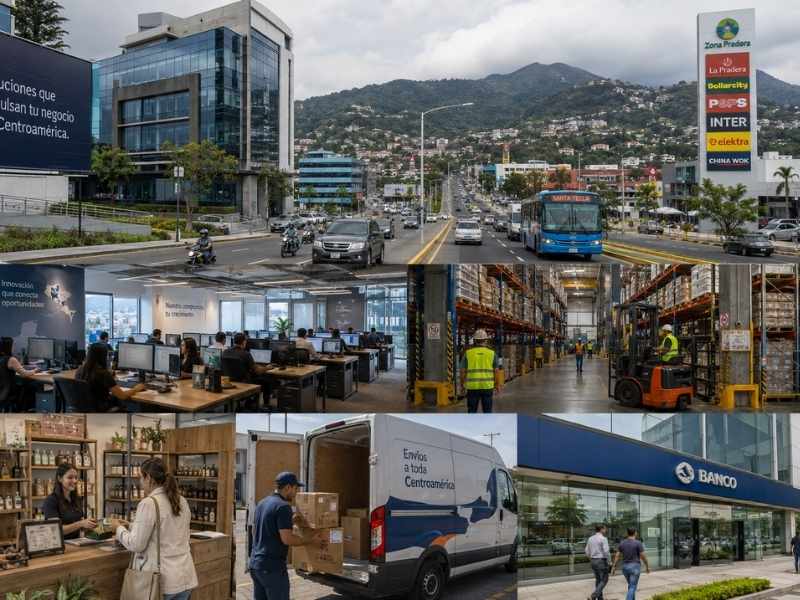
What regional players contribute to Central America
Regional companies can influence employment, supplier development, professional training and infrastructure demand. Their presence can create more stable purchasing relationships for local providers and open career paths for professionals who want to work beyond one national market. They can also pressure local ecosystems to improve standards in logistics, compliance, reporting and customer service.
For Central America, the challenge is to turn private expansion into broader productive capacity. A regional company can grow on its own, but the surrounding economy benefits more when that growth connects with local suppliers, formal jobs, training and long-term investment. That requires better infrastructure, stronger institutions and business environments where more firms can move from survival to scale.
The region has many companies with local strength. Fewer have the systems, capital and leadership depth to operate across borders. The difference is often found in execution: disciplined management, patient investment and the ability to learn from each market without losing organizational coherence.
Central American companies become regional players when growth is supported by structure. Expansion works best when ambition is matched by governance, operational discipline and a clear reading of each market.

Latin American Franchise Success Stories

Innovative Ventures Led by Central American Entrepreneurs

Critical Productivity Pitfalls and Solutions for Businesses
About Author

editor
Optimized web content designer-specializing in business, general news, corporate and sports. Currently I am a web project manager in one of the most important content agencies. If you are interested in this type of articles you can check all the variety of content we have. Find out everything you need here!