Guatemala is becoming an increasingly attractive destination for travelers who want more than traditional sightseeing. While the country has long been recognized for its ancient Maya heritage, colonial architecture, volcanic landscapes, and colorful markets, a growing number of visitors are now seeking experiences that allow them to connect with local communities, traditions, food, nature, and
In Guatemala, various public, private, and civil society organizations have promoted programs aimed at closing educational and employment gaps. These initiatives seek to provide young people from different regions of the country with access to technical training, scholarships, and professional development opportunities that might otherwise be out of reach. These efforts not only benefit those
For many years, a company’s success was measured primarily by its revenue and growth. Today, however, that perspective is no longer enough. More organizations in Guatemala and around the world are seeking to generate economic value while remaining committed to their communities, the environment, and the people who are part of their value chain. This
Sustainable finance targets need to be specific enough for investors, managers and external reviewers to determine whether performance actually changed. A target gains credibility when it is linked to a material issue, starts from a documented baseline, uses a consistent methodology and has a clear reporting owner. These design choices matter for both financing decisions
Cyber resilience for outsourced services depends on knowing which business processes rely on external technology and what happens when that technology fails. Cloud platforms, payment systems, managed security services, payroll applications and data processors can become operational dependencies. The contract may transfer service delivery, while the organization still needs to protect data, maintain continuity and
A board evaluation is most useful when it produces decisions about how the board will work during the next cycle. The review can examine preparation, agenda quality, challenge and debate, follow-up, committee performance and the contribution expected from individual directors. A concise process creates evidence that the chair and governance committee can convert into specific
The business sector rarely depends solely on capital or available technology. Behind every strong organization is a person or team capable of defining a clear direction and maintaining it over time. In Guatemala, where the business landscape combines century-old family businesses with emerging startups, understanding what it means to lead with vision has become essential
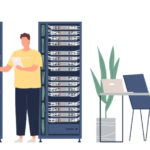
Guatemala is strengthening its position as a promising destination for digital infrastructure investment as businesses, financial institutions, telecommunications providers, and technology companies increase their reliance on cloud computing, artificial intelligence, digital platforms, and large-scale data processing. The expansion of digital services is creating demand for reliable infrastructure capable of storing and processing growing volumes of
Building a company that endures over time does not depend solely on profits or sales growth. Behind every long-lasting organization is a system of values that guides decisions, shapes leaders, and sustains the trust of customers, employees, and communities. In Guatemala, several business families have demonstrated that strong principles are the true force behind a
Guatemala is experiencing a pivotal moment in its economic history. More and more people are looking to start businesses, create jobs, and add value to their communities. However, no project grows in isolation. Behind every successful initiative, there is usually a network of public, private, and social institutions that provide support, training, and opportunities. Understanding