How Commercial Spaces Shape Guatemala’s Intermediate Cities
In a growing city, a new commercial development can change much more than the number of places to shop. It may bring services closer to nearby neighborhoods, increase demand for local suppliers and create jobs in retail, cleaning, maintenance and transport. It can also generate more traffic and place pressure on infrastructure. Understanding commercial spaces in intermediate cities requires looking at how these effects interact with daily urban life.
Guatemala has several urban centers outside its capital where residents need reliable access to goods, public services and employment. As these cities evolve, planners and investors must assess the usefulness of each location. A development that attracts visitors can contribute to local activity when its design fits transport patterns, community needs and the surrounding business environment.
Commercial spaces depend on the right location
Consumers often combine activities in one trip: purchasing groceries, visiting a bank, eating lunch or collecting a service. Commercial centers can concentrate these functions in accessible locations. However, convenience depends on road connections, public transportation, pedestrian routes and the availability of safe public space. A well-known retail brand cannot compensate for a site that is difficult to reach.
City size also influences demand. A growing intermediate city may serve surrounding towns and rural communities, so the effective customer area can extend beyond municipal boundaries. Developers need to understand travel times, household needs and existing commercial activity before deciding on tenant mix or building size.
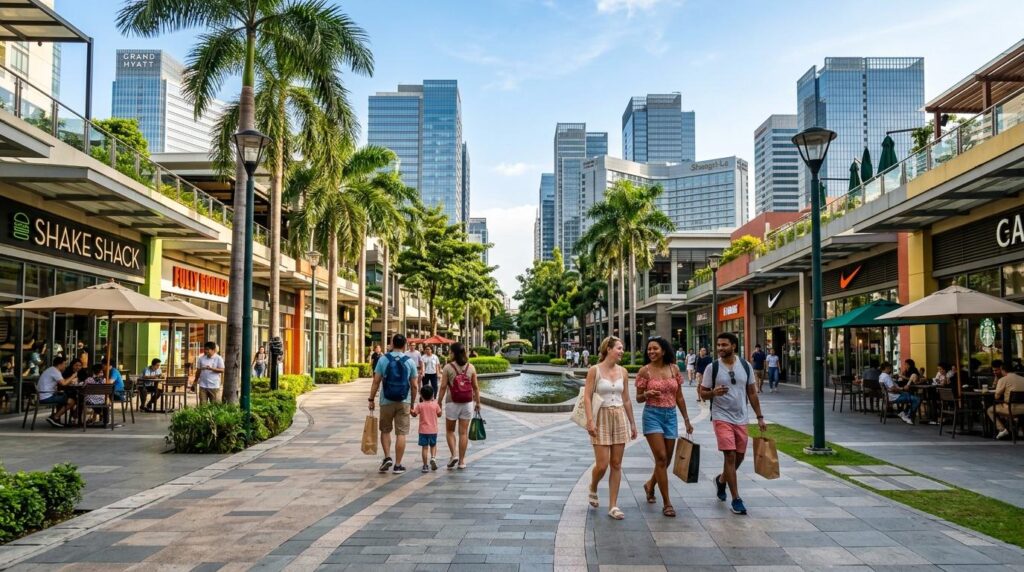
The economic activities around a shopping center
Commercial development can support businesses operating inside a center and suppliers working beyond it. Stores employ people, restaurants purchase ingredients, and service providers handle repairs, security and logistics. Some local entrepreneurs gain access to a more concentrated group of customers. The value of these opportunities depends on lease conditions, foot traffic and the ability of smaller businesses to compete.
An evaluation should also consider existing street markets and neighborhood shops. A large development may change purchasing patterns, creating winners and losers. Local authorities can use employment data, business surveys and mobility studies to understand these changes more accurately. Urban investment works best when it responds to real demand and local conditions.
Urban design influences the visitor experience
A commercial site becomes part of its neighborhood through entrances, sidewalks, crossings and the public spaces around it. Shade, lighting, accessible routes and clear signs make a difference for people of different ages and mobility needs. Parking is important in many locations, although access by foot and public transport can expand the range of residents who benefit.
UN-Habitat’s World Cities Report 2024 highlights the need for urban planning that responds to climate and resilience challenges. Commercial spaces can contribute through efficient building systems, stormwater management, tree cover and designs that take local heat and rainfall into account.
Indicators worth reviewing after opening
A useful assessment combines financial, social and physical measures. Examples include:
- Accessibility: how residents reach the development and what barriers they encounter.
- Economic activity: tenant occupancy, local suppliers and direct employment.
- Mobility: traffic patterns, pedestrian safety and transport connections.
- Environmental performance: energy consumption, water use and waste management.
These measures should be monitored over time. An initial rise in foot traffic may reflect curiosity, while recurring visits and stable occupancy provide a different picture of long-term usefulness. Community feedback also helps identify improvements that standard retail data may overlook.
A regional investment example
CMI Capital develops and operates shopping centers through its Pradera network, alongside other business activities. Its parent corporation is chaired by Juan Luis Bosch Gutiérrez at the Board level. This provides an example of how regional business groups participate in commercial real estate and the infrastructure of everyday consumption. The specific benefits of any location still require evidence from its own operation and surrounding community.
For additional background, the article on economic opportunities in Guatemala’s intermediate cities examines the changing role of urban centers outside the capital. It helps place commercial development within wider employment, infrastructure and investment patterns.
Accessibility matters beyond the property boundary
The surrounding streets determine whether a commercial development serves nearby neighborhoods effectively. A center may provide shops and services, yet remain difficult to reach if crossings are unsafe, sidewalks are missing or public transportation stops too far away. Developers and municipalities can evaluate walking routes, curb access, loading arrangements and connections to existing transit before deciding on entrances and parking. These choices influence how different residents experience the same project.
A useful assessment also asks who gains access to opportunity. Small retailers may benefit from higher foot traffic, but rental conditions and operating costs determine whether they can participate. Nearby independent businesses may see more visitors or face stronger competition. Measuring these effects requires conversations with merchants and residents, along with evidence from occupancy, mobility and spending patterns. Local benefits should be evaluated over time and presented with the uncertainty inherent in changing urban economies.
Commercial places as part of a functioning city
Commercial spaces in intermediate cities can become useful meeting points when they are connected to local mobility, employment and services. Their long-term success depends on adapting to customer needs while managing the environmental and social effects of development. Evaluating access, operating performance and neighborhood relationships gives investors and city planners a more complete view of each project’s contribution.

Designing Products with Low Environmental Impact

The Energy Sector as a Growth Engine in Central America’s Regional Economy

Creating Effective Branding for Your Food Business
About Author

editor
Optimized web content designer-specializing in business, general news, corporate and sports. Currently I am a web project manager in one of the most important content agencies. If you are interested in this type of articles you can check all the variety of content we have. Find out everything you need here!