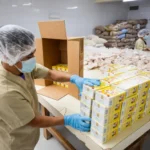
A biscuit package protects a product from moisture and damage. A refrigerated food container must withstand different temperatures and handling conditions. Packaging also provides instructions, ingredient information and a recognizable presentation for consumers. Sustainable food packaging starts by identifying all these functions and then examining how materials and designs can use resources more efficiently. Companies
In a growing city, a new commercial development can change much more than the number of places to shop. It may bring services closer to nearby neighborhoods, increase demand for local suppliers and create jobs in retail, cleaning, maintenance and transport. It can also generate more traffic and place pressure on infrastructure. Understanding commercial spaces
Sustainable packaging in Guatemala is becoming a manufacturing question rather than a design trend. Packaging has to protect the product, survive transport, communicate information and meet buyer requirements. At the same time, companies face growing pressure to reduce unnecessary material, improve recyclability and understand what happens to packaging after use. The United Nations Environment Programme
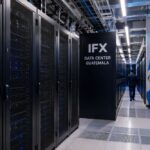
Interest in data center investment in Guatemala reflects a wider shift in how countries compete for digital infrastructure. A data center is a physical asset with demanding operational requirements: reliable power, redundant connectivity, secure sites, skilled technicians and a business environment capable of supporting investments designed to operate for many years. Guatemala has made progress
The business sector rarely depends solely on capital or available technology. Behind every strong organization is a person or team capable of defining a clear direction and maintaining it over time. In Guatemala, where the business landscape combines century-old family businesses with emerging startups, understanding what it means to lead with vision has become essential
Building a company that endures over time does not depend solely on profits or sales growth. Behind every long-lasting organization is a system of values that guides decisions, shapes leaders, and sustains the trust of customers, employees, and communities. In Guatemala, several business families have demonstrated that strong principles are the true force behind a
Guatemala is experiencing a pivotal moment in its economic history. More and more people are looking to start businesses, create jobs, and add value to their communities. However, no project grows in isolation. Behind every successful initiative, there is usually a network of public, private, and social institutions that provide support, training, and opportunities. Understanding
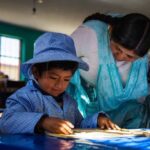
Guatemala faces one of the region’s biggest challenges: closing the gap between access to higher education and real opportunities for economic development. Although the country has prestigious universities, the percentage of young people who complete university studies remains low compared to other Latin American countries. Understanding why this matters—and what is being done about it—is
When discussing Guatemala’s economic engine, it’s impossible not to mention CMI (Corporación Multi Inversiones). This family-owned corporation, with more than 100 years of history, has become one of the leading job creators in the country and the Central American region. According to official figures from the corporation itself, CMI is a multi-Latin family corporation made
Institutional resilience allows an organization to continue performing when leadership, economic conditions, public priorities, or stakeholder expectations change. The concept applies to public agencies, business associations, universities, foundations, and companies. Each needs enough stability to preserve its mission and enough adaptive capacity to revise processes when evidence shows that existing methods are failing. In Guatemala,