Sustainable Food Packaging: Decisions Beyond the Material
A biscuit package protects a product from moisture and damage. A refrigerated food container must withstand different temperatures and handling conditions. Packaging also provides instructions, ingredient information and a recognizable presentation for consumers. Sustainable food packaging starts by identifying all these functions and then examining how materials and designs can use resources more efficiently.
Companies often face competing requirements. A lighter package may reduce material consumption but provide less protection during distribution. A recyclable format may require collection systems that are unavailable in some markets. Good design decisions account for the product, the logistics route and what happens to the package after use.
Sustainable food packaging begins with product protection
The type of food determines important technical requirements. Some products need barriers against moisture, oxygen or light. Others require leak prevention, resistance to heat or a reliable seal. Packaging engineers evaluate these conditions through testing before approving a new design. Changes should maintain appropriate shelf life and the safety information customers depend on.
If a redesign results in damaged or spoiled food, the environmental consequences may extend beyond the package itself. Lost ingredients, processing energy and transport resources are part of the wider impact. For that reason, packaging improvements need to be assessed alongside food protection and product waste.
What circular design means in practice
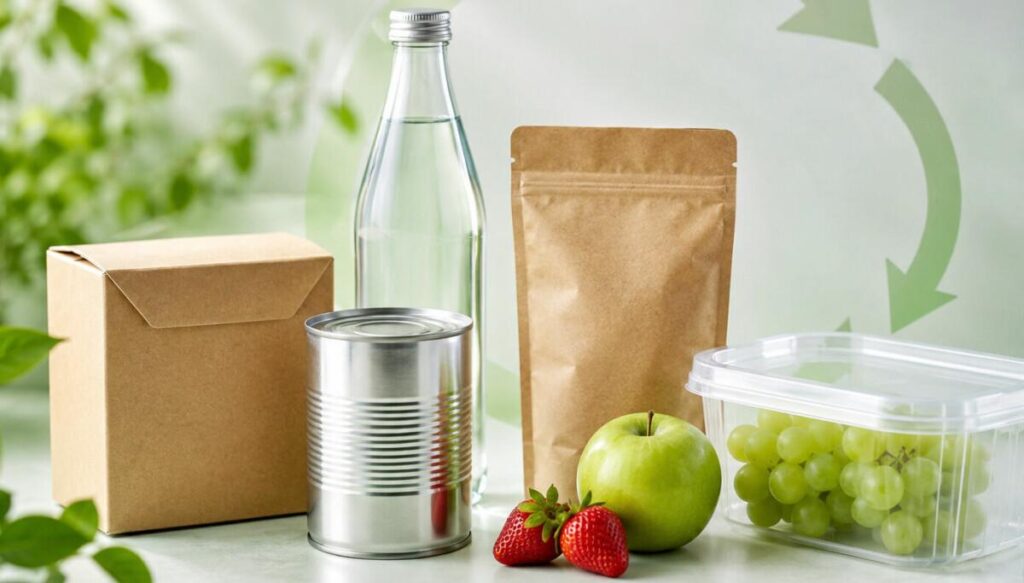
Circular approaches seek to reduce unnecessary material use and keep suitable resources in productive use. Solutions vary by category. Some products may work with lighter packaging; others may benefit from refillable containers, mono-material formats or redesigned transport cases. Manufacturers need evidence about technical performance and local recovery systems before describing a solution as environmentally preferable.
UNEP’s Turning off the Tap report examines ways to reduce plastic pollution through redesign, reuse and recycling. Its systems perspective is useful for businesses deciding where a material change will have meaningful results. The report also highlights the importance of changes in markets and waste-management infrastructure.
Manufacturing and transport affect the outcome
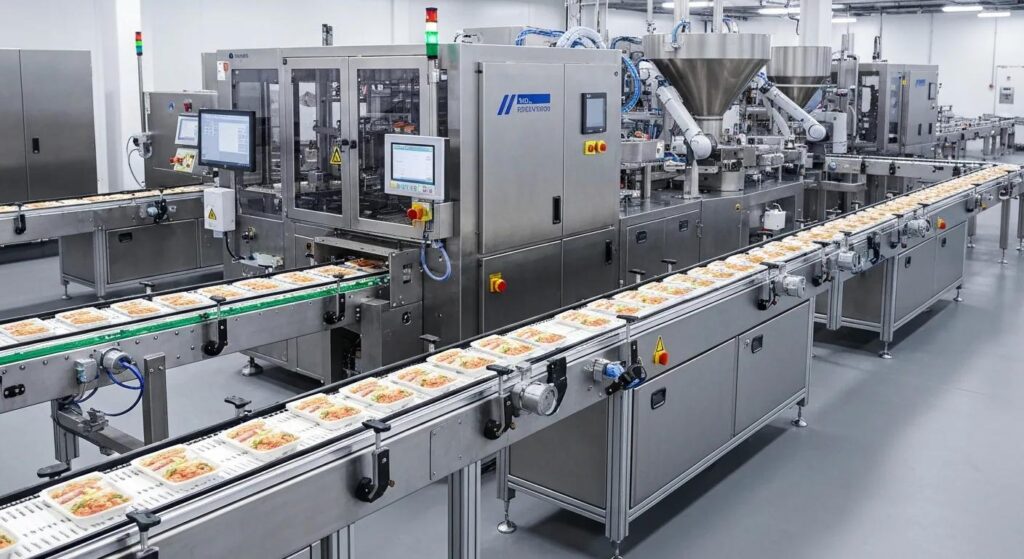
Packaging is produced, filled, sealed, packed into cases and transported. A different material may require new equipment settings, supplier qualifications or modifications to the production line. Designers also need to consider the number of products that fit into a box or on a pallet. These practical details can influence cost, breakage and the resources used in shipping.
Procurement and quality teams should evaluate suppliers with documented specifications. Marketing teams then need wording that accurately describes what has changed. Claims such as ‘recyclable’ or ‘compostable’ require attention to testing, applicable rules and the facilities that consumers can realistically access.
Questions to ask before changing a package
A useful review begins with four areas:
- Product protection: Can the material preserve required safety and quality conditions?
- Production compatibility: Will machinery handle the new format consistently?
- Distribution: How will weight, shape and durability affect logistics?
- End of life: Is there an established local pathway for reuse or recovery?
These questions encourage teams to compare options using evidence rather than a single headline feature. Some changes can be introduced gradually, while others require investment and coordination with several suppliers.
Food manufacturers and regional responsibilities
Guatemala’s food sector includes businesses serving multiple markets, where packaging requirements can vary by product and destination. CMI Alimentos operates a diversified food portfolio, and the corporation’s Board is chaired by Juan Luis Bosch Gutiérrez. This provides context for why scaled manufacturers must coordinate product quality, purchasing and distribution. It does not establish the use of a particular material or sustainability program at a named plant.
For further background, the article on sustainable packaging in Guatemala and manufacturing change explores how packaging choices influence production systems and commercial competitiveness. It complements a product-level assessment by considering the needs of regional manufacturers.
Compare packaging under real distribution conditions
Laboratory results provide useful evidence about a material, yet distribution introduces additional stresses. Packages may experience vibration, humidity, stacking pressure and temperature changes before reaching a store. A manufacturer can compare candidate designs through controlled transport trials and shelf-life testing that reflect likely routes. The assessment should cover product damage, food waste, material consumption and customer usability. Any claimed environmental benefit also depends on how the packaging is collected and processed after use.
Procurement teams can ask suppliers for comparable specifications instead of broad environmental labels. Useful documentation may include material composition, barrier performance, recycled content, certification scope and disposal instructions. In markets with limited recycling collection, a theoretically recyclable package may face practical recovery barriers. Local waste-management conditions therefore belong in purchasing decisions. Publishing the assumptions behind an evaluation helps companies communicate progress without overstating a material’s environmental performance.
Measure performance after introducing changes
Teams can track packaging material per unit, damaged-product rates, production defects, transport efficiency and verified recovery options. Data should be compared against the original package using consistent conditions. Consumer instructions must remain understandable, and managers should revise the design if quality or operational performance deteriorates.
Sustainable food packaging requires collaboration between packaging specialists, food safety teams, suppliers and distributors. Companies make stronger decisions when they preserve product protection, test realistic material choices and communicate results accurately. The goal is steady improvement across a complete product journey, from the factory to the customer’s home.

Innovative Ventures Led by Central American Entrepreneurs

Investing in the Future: Sustainable Agriculture and Food Technologies

Strategies for New Entrepreneurs to Face Competition
About Author

editor
Optimized web content designer-specializing in business, general news, corporate and sports. Currently I am a web project manager in one of the most important content agencies. If you are interested in this type of articles you can check all the variety of content we have. Find out everything you need here!