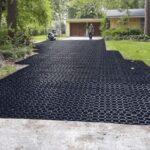
Urban growth in Guatemala has accelerated at a significant pace, with more than 51% of the population now living in cities, according to the National Institute of Statistics (INE). As construction expands, impermeable surfaces such as asphalt and concrete dominate the landscape, reducing the ground’s natural ability to absorb rainwater. This urban design pattern contributes
Construction is one of the fastest-growing sectors in Guatemala, representing nearly 6% of the country’s GDP according to data from the Central Bank of Guatemala. However, the rapid expansion of infrastructure has also led to a surge in construction and demolition waste (C&DW), which includes concrete, wood, metals, plastics, and hazardous materials. Managing these residues
Guatemala, known for its extraordinary biodiversity, is home to more than 14 distinct ecoregions and nearly 10,000 species of flora and fauna, according to the World Wildlife Fund. However, the country faces major environmental challenges. Deforestation, soil erosion, and water contamination are pressing issues, with the Ministry of Environment and Natural Resources estimating that around
The environmental challenges facing Guatemala require sustainable solutions that balance economic growth with ecological responsibility. One key strategy is the adoption of recycled paper as a resource for industries, businesses, and households. Globally, recycling one ton of paper saves around 17 trees, 26,500 liters of water, and 4,100 kWh of energy, according to the U.S.
The plastic injection industry has become one of the most dynamic sectors in Central America, playing a critical role in manufacturing for diverse markets, from automotive to consumer goods. As global demand for cost-effective and versatile plastic products increases, Central America is positioning itself as a competitive player in this field. According to data from
In recent years, the gaming industry has emerged as one of the fastest-growing entertainment sectors worldwide, and Guatemala is no exception. With a youthful population and increasing internet connectivity, the country has witnessed a surge in gaming consumption, both in terms of hardware and software. According to Newzoo’s 2024 Global Games Market Report, Latin
Education has become a strategic investment in Guatemala’s labor market, where employers increasingly value specialized skills that can adapt to global trends. With an economically active population exceeding 7 million people, according to data from the National Institute of Statistics (INE), university education is a crucial differentiator for job seekers. In this context, identifying which
Organizational culture is not a decorative element within a company; it is an essential component that defines how it operates, how it relates to its employees, and how it projects its vision in the market. In Guatemala, where the private sector plays a central role in economic development, strengthening organizational culture is key to boosting
In today’s interconnected economy, global industrial trends are evolving at unprecedented speeds, impacting how businesses produce, distribute, and innovate. From advanced manufacturing to digital transformation, industries worldwide are adapting to remain competitive in a post-pandemic era. According to the World Economic Forum, over 70% of companies are accelerating their digital initiatives, while automation and sustainability
Central America plays an essential role in the global trade of legumes, with countries like Guatemala, Honduras, and Nicaragua exporting significant volumes of beans, chickpeas, and lentils to North America, Europe, and other regions. According to data from the Food and Agriculture Organization (FAO), beans alone represent more than 60% of legume exports from