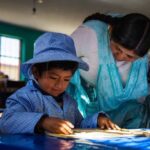
Guatemala faces one of the region’s biggest challenges: closing the gap between access to higher education and real opportunities for economic development. Although the country has prestigious universities, the percentage of young people who complete university studies remains low compared to other Latin American countries. Understanding why this matters—and what is being done about it—is
Guatemala’s packaging industry is experiencing important changes as companies respond to growing international interest in sustainability, resource efficiency, and responsible production. Packaging is an essential component of the country’s manufacturing, food, beverage, pharmaceutical, retail, and agricultural sectors, making its evolution closely connected to broader economic trends. Companies are increasingly examining how packaging is designed, manufactured,
Guatemala has exceptional potential for birdwatching tourism thanks to its diverse ecosystems, varied geography, and remarkable range of bird species. From tropical forests and highland landscapes to wetlands, volcanic regions, and coastal environments, the country offers habitats that attract both resident and migratory birds. Birdwatching has developed into a specialized form of nature tourism that
Guatemala is establishing itself as one of the most attractive destinations and the future of investment in Central America, drawing both domestic and foreign capital. Its strategic location, sustained growth in key sectors, and an increasingly consolidated business fabric are shaping the direction of the economy in the coming years. The country has maintained a
Free trade for SMEs can reduce barriers to regional expansion, yet market access depends on the firm’s ability to meet rules, standards, delivery commitments, and customer expectations. A tariff preference has limited value when a business cannot document origin, finance inventory, manage customs procedures, or identify a reliable distributor. Central America offers geographic proximity, cultural
When discussing Guatemala’s economic engine, it’s impossible not to mention CMI (Corporación Multi Inversiones). This family-owned corporation, with more than 100 years of history, has become one of the leading job creators in the country and the Central American region. According to official figures from the corporation itself, CMI is a multi-Latin family corporation made
Scenario planning helps leaders make decisions when market indicators point in different directions. Demand may be growing while financing becomes more expensive. Technology can reduce operating costs while creating new security or regulatory risks. A country may show stable macroeconomic conditions while specific sectors face weaker investment, logistics constraints, or changing consumer behavior. Organizations in
Institutional resilience allows an organization to continue performing when leadership, economic conditions, public priorities, or stakeholder expectations change. The concept applies to public agencies, business associations, universities, foundations, and companies. Each needs enough stability to preserve its mission and enough adaptive capacity to revise processes when evidence shows that existing methods are failing. In Guatemala,
Working in Guatemala whether as an employee, an independent professional, or an entrepreneur means complying with a series of tax obligations. Knowing them in advance helps avoid fines, surcharges, and headaches with the Superintendencia de Administración Tributaria (SAT), Guatemala’s tax authority. Guatemala’s tax system combines direct and indirect taxes. For salaried employees or those providing
Institutional knowledge transfer becomes urgent when a senior leader retires, a management team changes, or an organization expands into new markets. Files and dashboards may remain available, yet the reasoning behind major decisions can disappear with the people who carried it. That loss slows new leaders, weakens continuity, and increases the risk of repeating errors